The Gardens
The gardens are sited within the Litchfield Hills in the northwestern part of Connecticut in the United States.
The gardens are located on the site of a farm that was established during the mid-1700s. At the turn of the 20th century the farm was purchased by the landscape artist William Merritt Post. A studio was built and Post raised his family and farmed until near his death in 1935. Post called the farm Applewood. Since his death the property has been known as Post Hill. Several of the recent owners raised horses but the stables currently house flower pots and bags of growing media.
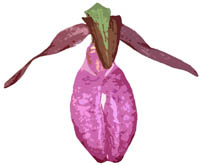
The rear of the property borders a small stream, the Bantam River, and is wooded with hardwoods, pines and hemlocks. The Litchfield Hills are rich in Cypripedium acaule, our logo flower.
We moved onto the property in February, 2005, with dozens of pots of plants that had to wait until the April thaw to begin putting into place. They spent the last two months of the winter in boxes in the barn!
Propagating Our Plants
One of the most important activities we undertake is the propagation of our plants. Many of the plants we grow require specialized methods to propagate by seed. The orchids, in particular, are challenging since their seed do not contain stored nutrients. In nature, orchid seed depends upon soil fungi to infect them and provide the developing orchid embryo with nutrients in the form of simple sugars, amino acids, and vitamins. In order to germinate orchid seed, they must be sterilized and placed into sterile growth media until the seedlings are old enough produce their own food by means of photosynthesis. Here is how orchids are propagated from seed.